Anabelle Colaco
18 Jan 2026, 11:56 GMT+10
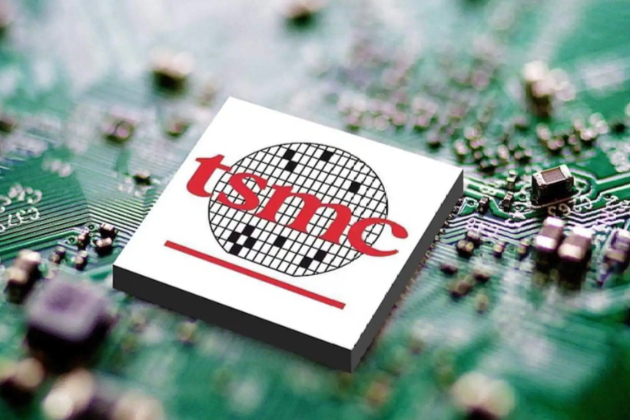
TAIPEI, Taiwan: Taiwan is seeking to anchor its trade relationship with the United States around artificial intelligence and advanced semiconductors, positioning itself as a long-term strategic partner under a new tariff and investment deal struck with Washington.
Vice Premier Cheng Li-chiun said on January 16 that Taiwan hopes closer cooperation on AI will follow the agreement, which cuts tariffs on many Taiwanese exports and commits billions of dollars to expanding technology investment in the United States.
The push comes as the administration of Donald Trump has pressed Taiwan — a major global semiconductor producer — to expand chip manufacturing on U.S. soil, particularly for processors used in artificial intelligence.
"In this negotiation, we promoted two-way Taiwan–U.S. high-tech investment, hoping that in the future we can become close AI strategic partners," Cheng said in remarks livestreamed from a press conference in Washington.
Cheng led the talks that concluded with a trade deal on January 15, which lowers tariffs and directs new Taiwanese investment into the U.S. technology sector. The agreement could also complicate relations with China, which claims democratically governed Taiwan as its territory and opposes high-level U.S.–Taiwan engagement. Taiwan rejects Beijing's sovereignty claims.
U.S. Commerce Secretary Howard Lutnick said Taiwanese companies would invest US$250 billion to expand production of semiconductors, energy, and artificial intelligence in the United States. That total includes $100 billion already pledged in 2025 by TSMC, with further commitments expected, he said.
The Trump administration also said Taiwan would guarantee an additional $250 billion in credit to support further investment.
‘Close Partners'
Cheng described the agreement as "win-win," adding that it would also help attract U.S. investment into Taiwan. The United States remains Taiwan's most important international backer and arms supplier, despite the absence of formal diplomatic ties.
He stressed that the investment push would be driven by companies rather than government directives, and that Taiwanese firms would continue investing at home.
"We believe this supply-chain cooperation is not ‘move,' but ‘build.' We expand our footprint in the U.S. and support the U.S. in building local supply chains, but even more so, it is an extension and expansion of Taiwan's technology industry."
Investments would also include AI servers and energy projects, Taiwan Economy Minister Kung Ming-hsin said, adding that companies would decide how much of the spending was directed specifically at chips.
Taiwan's benchmark stock index closed at a record high on Friday, buoyed by strong fourth-quarter earnings from TSMC and a positive investor response to the tariff agreement.
"Taiwan is the first country the U.S. has publicly announced as receiving the most preferential treatment for chips and related products, highlighting that Washington views Taiwan as a key strategic partner in semiconductors," said Chang Chien-yi, president of the Taiwan Institute of Economic Research.
TSMC Role
In a statement, TSMC welcomed the prospect of "robust" trade agreements between Taiwan and the United States, while emphasizing that its investment decisions are guided by market conditions and customer demand.
"The market demand for our advanced technology is very strong," the company said. "We continue to invest in Taiwan and expand overseas."
Once formally signed, the deal must be approved by Taiwan's parliament, where the opposition holds a majority and has voiced concern about the potential "hollowing out" of the island's vital semiconductor industry.
Lutnick told CNBC that the goal was to bring 40 percent of Taiwan's chip supply chain and production to the United States, warning that tariffs could reach 100 percent if facilities were not built domestically.
Kung said he did not know how the 40 percent figure was calculated, adding that Taiwan estimates production of advanced chips — those at five nanometers and below — would be split roughly 80/20 between Taiwan and the U.S. by 2036.
"This round of deployment will strengthen the resilience of Taiwan–U.S. and global semiconductor supply," he said. "A moderate level of global diversification is also necessary. Going forward, the biggest AI orders will come from the U.S. market."
Lutnick described the semiconductor investment as the largest in U.S. history in a post on X, while Taiwan Vice President Hsiao Bi-khim said the deal showed Taiwan's growing role in global trade.
"Taiwan may not be large in area, but we are agile and innovative - and we are an indispensable force for good within the global supply chain," she said.
Get a daily dose of Dallas Sun news through our daily email, its complimentary and keeps you fully up to date with world and business news as well.
Publish news of your business, community or sports group, personnel appointments, major event and more by submitting a news release to Dallas Sun.
More InformationWASHINGTON, D.C.: U.S. aviation regulators have issued new safety warnings for airlines operating across parts of Latin America, cautioning...
LOS ANGELES, California: Cutting short their mission at the International Space Station, four astronauts returned safely to Earth early...
MINNEAPOLIS, Minnesota: A day after an immigration officer was attacked in Minneapolis, President Donald Trump threatened to invoke...
WASHINGTON, D.C.: Despite the Nobel Institute stating that a Nobel Prize winner could not hand over the award to anyone else, Venezuelan...
U.S. President Donald Trump has hit out at countries that have objected to his plans to seize Greenland whether by agreement or by...
NEW YORK/WASHINGTON: As the main enrollment window for subsidized U.S. health insurance plans closes, millions of Americans are heading...
BEIJING, China: Prime Minister Mark Carney announced that Canada will slash tariffs on electric vehicles as the country looks to forge...
LONDON/HONG KONG, — Global equity markets presented a split picture on Monday, with UK and European bourses suffering sharp declines...
SAN FRANCISCO, California: After years of offering its flagship chatbot to most users at no cost, OpenAI is preparing to introduce...
OAKLAND, California: A legal battle over the origins and direction of one of the world's most prominent artificial intelligence companies...
BRUSSELS, Belgium: The European Union is preparing more rigid rules that would require member states to remove Chinese-made equipment...
LONDON, U.K.: As it turns 25, Wikipedia is formalizing its relationship with the artificial intelligence industry, striking new commercial...